16 years one-stop China custom CNC machining parts factory

Hey there I’m VMT Sam!
With 25 years of CNC machining experience we are committed to helping clients overcome 10000 complex part-processing challenges all to contribute to a better life through intelligent manufacturing. Contact us now
 0 |
Published by VMT at Oct 26 2026 | Reading Time:About 6 minutes


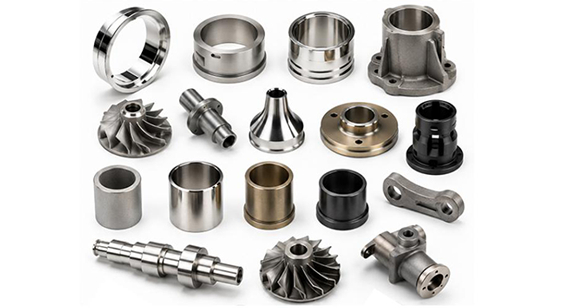
Superalloys are essential materials for high-quality CNC machining in demand operating conditions such as modern aerospace, power generation, and advanced equipment. However, due to their high hardness, exceptionally poor thermal conductivity, and strong work-hardening tendencies, CNC machining processes are prone to severe tool wear, thermal deformation, and chatter issues, which negatively impact surface quality and dimensional accuracy while driving up high manufacturing costs.
By reading this article, you will gain a comprehensive understanding of mainstream superalloy types and grade characteristics, scientific material selection and DFM design recommendations, and how to evaluate and select qualified manufacturing partners with genuine capabilities.
Core Point of View and Case Study
As demonstrated in this article, the core of Superalloys CNC Machining lies in combining precise material selection, scientific Design for Manufacturability (DFM), and advanced cutting strategies to maintain extreme operating performance while controlling tool costs that otherwise range from 15% to 30%.
For instance, at the end of this article, we share a case study from our superalloy CNC machining facility: during the precision machining of an Inconel 718 fuel nozzle, the application of rigid 5-axis machine tools, trochoidal milling, and high-pressure cooling successfully extended tool life by 45%, stabilized surface roughness at Ra 0.32 micrometers, and raised the dimensional pass rate to 99.4%.
Superalloy sare high-end materials used in demanding operating conditions such as modern aerospace, power generation, and advanced equipment. Before performing CNC precision machining, the primary task is to select the most suitable material based on operating temperature, stress state, corrosive environment, and cost budget.
First, there is a quick recommendation:
Table 1: Common Superalloy Types and Grades
The following table lists the most common superalloy types, grade examples, and primary characteristics:
| Types | Grades (UNS / Commercial Name) | Characteristics and Applications |
| Wrought Nickel-Based | Inconel 718 (N07718) | Superalloy. Accounting for half of total superalloy production, it features high yield strength and machinability between -253°C and 650°C, used for turbine disks and fasteners. |
| Wrought Nickel-Based | Inconel X-750 | Good corrosion and oxidation resistance, commonly used for high-temperature springs and bolts. |
| Corrosion-Resistant Nickel-Based | Hastelloy C-276 / X | Strong resistance to pitting, crevice corrosion, and reducing media, widely used in chemical processing, flue gas desulfurization, and aero-engine combustion chambers. |
| Wrought Nickel-Based | Waspaloy | Features high shear strength and creep resistance, commonly used for high-temperature casings and blades of high-performance gas turbines. |
| Cast Cobalt-Based | Stellite 31 / X-40 | High thermal corrosion and fatigue resistance, mostly used for guide vanes in aero-engines and gas turbines. |
| Wrought Iron-Based | A-286 (S66286) | Features good yield strength and corrosion resistance below 650°C, mostly used for automotive and jet engine fasteners and welded parts. |
| Single Crystal / Directional | PWA 1484 / René N5 | Advanced single-crystal or directionally solidified blade material with high temperature resistance, used for the first-stage turbine blades of advanced military and civilian aero-engines. |
Table 2: Properties and Costs of Typical Superalloy Grades
To help you make more specific material choices and trade-offs during the project design stage, we compared key engineering metrics of the mainstream superalloys mentioned above:
| Property | Inconel 718 | Inconel X-750 | Hastelloy C-276 | Waspaloy | Stellite 31 (X-40) | A-286 | René N5 / PWA 1484 |
| Density / Weight | ~8.19 g/cm³ (Medium-high) | ~8.28 g/cm³ (Medium-high) | ~8.89 g/cm³ (High) | ~8.19 g/cm³ (Medium-high) | ~8.61 g/cm³ (High) | ~7.94 g/cm³ (Medium) | ~8.70 g/cm³ (Medium-high) |
| Operating Temperature Range | -253°C to 650°C (up to 700°C) | -250°C to 700°C | -196°C to 1000°C | -250°C to 870°C | Up to 1050°C | -200°C to 650°C | Up to 1150°C+ |
| Tensile Strength | ~1240 to 1400 MPa | ~1100 to 1250 MPa | ~790 to 890 MPa | ~1240 to 1350 MPa | ~800 to 950 MPa (cast state) | ~900 to 1000 MPa | ~1100 to 1200 MPa |
| Yield Strength | ~1030 to 1100 MPa | ~700 to 900 MPa | ~355 to 450 MPa | ~850 to 950 MPa | ~550 to 650 MPa | ~600 to 700 MPa | ~1000 MPa |
| Hardness | ~36 to 40 HRC | ~30 to 38 HRC | ~90 HRB (~20 HRC) | ~38 to 42 HRC | ~35 to 45 HRC | ~25 to 35 HRC | ~40 to 45 HRC |
| Thermal Conductivity | ~11.4 W/m·K | ~12.1 W/m·K | ~10.2 W/m·K | ~11.1 W/m·K | ~14.5 W/m·K | ~12.3 W/m·K | ~12 to 14 W/m·K |
| Melting Point | 1260°C to 1336°C | 1393°C to 1427°C | 1325°C to 1370°C | 1330°C to 1365°C | 1300°C to 1350°C | 1365°C to 1424°C | ~1380°C to 1420°C |
| Machining Difficulty | Higher | Higher | Very high | Very high | Very high | Medium | Very difficult |
| Creep Resistance | High | Good | Medium | Very high | Very high | Average | Maximum |
| Oxidation and Corrosion Resistance | Good | Good | Strong | Good | Excellent | Good | Very strong with TBC coating |
| Material Cost | Medium | Medium | High | High | High | Lower | Very high |
| Machining Cost | Higher | Higher | High | Very high | Very high | Medium | Very high |
Superalloys are essential materials in industries that operate under extreme conditions, including high temperatures, high pressures, and corrosive environments. So they are often used to manufacture components for aerospace, energy, oil and gas, and high-performance automotive sectors.
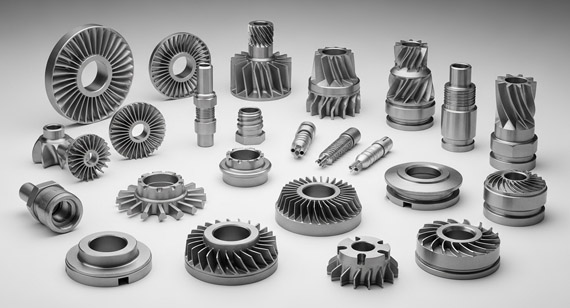
Major Industry Applications and Typical Parts
Table: Industry Applications, Core Grades, and CNC Machining Processes
| Industry | Typical Parts | Core Grades (Commercial Name) | Main CNC Machining Processes |
| Aerospace and Military | Turbine blades, blisks, combustion casings | Inconel 718, René N5 | 5-axis high-speed milling, electrical discharge machining (EDM), CNC grinding |
| Energy and Nuclear | Gas turbine guide vanes, nuclear fasteners, fuel nozzles | Hastelloy X, Inconel 690 | CNC mill-turning, precision deep-hole drilling |
| Oil and Gas | Wellhead valve spools, mud pump accessories, blowout preventers | Inconel 625, Monel 400 | Heavy horizontal milling, special thread turning |
| Automotive Industry | Turbocharger rotors, racing exhaust manifolds | Inconel 713C, Nimonic 80A | Precision CNC turning, high-precision dynamic balancing |
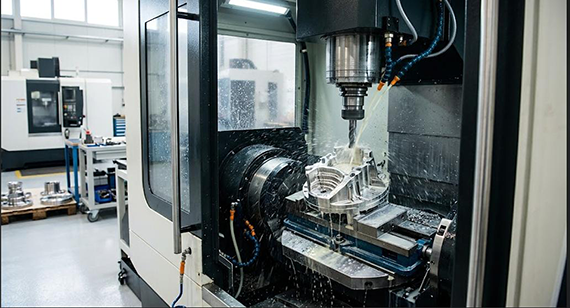
CNC machining of superalloys refers to computer-programmed machine tools controlling cutting tools to cut superalloys along specific paths, ultimately forming the required part shape. Generally speaking, wrought alloys are the most suitable choice.
However, although wrought superalloys are more suitable for CNC machining, cast superalloys can also be CNC machined, albeit with greater difficulty.
Usually, for efficiency and cost reasons, it is recommended to first use a casting process to produce a near-net-shape part, obtaining a component close to the final shape, and then use CNC machine tools to finish key mating surfaces, drill necessary holes, machine threaded mounting features, or perform CNC profile grinding or wire EDM (Electrical Discharge Machining).
Nevertheless, this approach is recommended only for larger production volumes (such as 10,000 pieces) because the tooling costs for casting are relatively high.
Because superalloys exhibit high mechanical strength, poor thermal conductivity, and strong strain-hardening tendencies, it is neccessary for you to use these following design tips to reduce machining risks, tool wear, and this also means overall manufacturing costs reduction.
1. Structural Geometry and Weight Reduction Design
Superalloys generally have high densities. When designing lightweight geometries, avoid abrupt transitions such as thick walls connected directly to thin walls. These structural variations create thermal gradients and stress concentrations, which can cause part warping or lead to premature thermal fatigue cracking during service.
2. Machinability Considerations in Design
3. Coating Allowance and Precision Fit
When precision superalloy components require secondary surface coatings, feature dimensions must account for the applied coating thickness:
Yes, quite high.
When machining standard steel or aluminum alloys, cutting tool costs typically account for only 3% to 5% of the total manufacturing cost. However, when machining superalloys such as Inconel 718, Waspaloy, or Hastelloy, tool costs often rise to between 15% and 30%. For complex 5-axis parts (such as blisks or deep-hole extra-long aerospace fasteners), tool expenses can even exceed 40%.
To optimize this cost component, your part design should align with the design recommendations covered in the previous section. Furthermore, the following sections will explain how to evaluate whether a manufacturing facility can effectively manage and optimize tool wear issues.
How a supplier address common challenges in superalloy CNC machining directly impacts your product's surface finish, dimensional accuracy, tool costs, and rework expenses.
Common Challenges in Superalloy CNC Machining:
Advanced Factory Solutions to Look For:
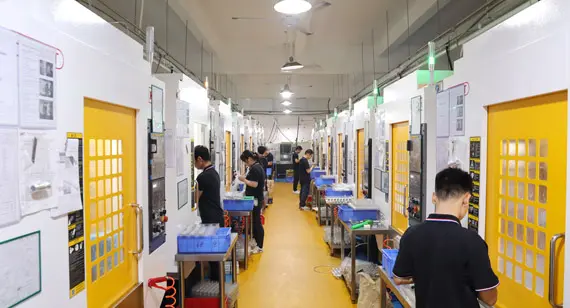
Additional Criteria for Evaluating Suppliers
Beyond machining techniques, you should also assess the superalloy parts cnc machining factory:
Other Key Requirements They Must Meet:
Superalloy components operating in harish environments often require secondary surface treatments to enhance fatigue resistance, thermal protection, and wear performance. Selecting the right surface treatment depends on specific engineering requirements such as corrosion resistance, high-temperature protection, wear resistance, or precise dimensional control. Here, let’s check a clear table of superalloy surface treatment which you can choose according to your requirements:
| Engineering Requirement | Recommended Surface Treatment | Impact on CNC Machined Dimensions | Why Choose It? |
| Fatigue Resistance / Stress Relief | Shot Peening | Minimal (slight surface texture) | Induces compressive residual stress to eliminate micro-cracks left by CNC machining. |
| Ultra-High Temperature Insulation (900°C+) | Thermal Barrier Coating (TBC Ceramic) | Larger (typically 100 to 500 micrometers thick) | Acts as a physical thermal shield to protect the metal base from extreme operating temperatures. |
| High Precision / Wear Resistance | PVD Coating (CrN / TiAlN) | Minimal (only 2 to 5 micrometers) | Enhances surface hardness significantly without compromising micrometer-level CNC tolerances. |
| Heavy-Duty Wear / Erosion | HVOF Tungsten Carbide Spraying | Large (requires machining allowance and post-grinding) | Creates an HRC 70+ super-hardened surface to withstand mud, sand, and particle erosion. |
| High-Temperature Thread Anti-Galling | Silver Plating | Smaller (typically 5 to 15 micrometers) | Uses silver's high-temperature self-lubrication to prevent expensive bolts from seizing in casings. |
| Anti-High-Temperature Oxidation / Sulfidation | Aluminizing | Smaller (surface atomic diffusion) | Automatically forms a dense aluminum oxide protective film at high temperatures to prevent metal embrittlement. |
Additionally, cleaning processes like descaling and pickling, along with precise masking during coating application, are essential pre-treatments to ensure treatment quality. Proper pre-treatments such as acid pickling and descaling, combined with selective masking, are crucial steps to remove oxidation layers and protect critical machined interfaces before applying these specialized surface coatings.
CNC Machining Inconel 718 Fuel Nozzles With ±0.01mm Tolerances And Reducing Total Part Production Costs By 28%.
Previous Supplier Failure: Ra 3.2 Surface Roughness and 35% Tool Cost Overruns
The client previously sourced this complex Inconel 718 fuel nozzle component, which features thin-walled structures and internal fluid channels. The previous supplier delivered parts with poor surface finishes showing visible chatter marks (Ra 1.6 to 3.2 micrometers), out-of-tolerance wall thicknesses exceeding ±0.03 mm, and excessively high tooling cost surcharges due to frequent tool chipping during deep cavity milling.
Root Cause Analysis: Harmonic Chatter and Resonance in Deep Cavity Milling
Our engineering review determined that the main failure mechanism was uncontrolled harmonic vibration (chatter). Because Inconel 718 has high strength and poor thermal conductivity, standard machining setups generated resonant frequencies during multi-axis contouring, destroying the surface integrity and causing premature tool breakdown.
Solutions: Rigid Machine Setups and 70-bar High-Pressure Coolant
To solve the vibration and thermal issues, we applied specific process adjustments:
Results: Ra 0.32 Surface Finish and 45% Increase in Tool Life
The final results were satisfied the client: surface roughness improved to a consistent Ra 0.32 micrometers, no need secondary hand-polishing operations. Dimensional pass rate reached 99.4%, keeping critical features strictly within ±0.01 mm. Tool life increased by 45%, reducing total per-part production costs by 28%.
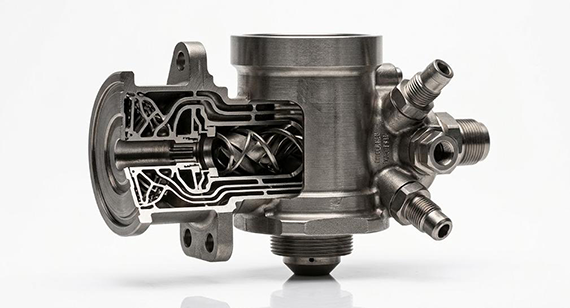
The production of CNC-machined superalloy components is a highly challenging engineering task that requires you to close attention to material characteristics, design techniques, and the selection of a manufacturing facility with the appropriate machining capabilities. Through this article, you have gained a comprehensive understanding of the performance differences and selection logic of mainstream superalloys (such as Inconel 718, Hastelloy C-276, and René N5), mastered DFM design principles to avoid work hardening and thin-walled deformation, and become familiar with surface treatment solutions that extend component lifespan. At the same time, you have seen that scientific process planning and mature manufacturing solutions are key to ensuring that complex superalloy parts achieve micrometer-level precision and high surface integrity, which are also critical criteria when vetting a superalloy CNC machining partner.
Looking for a reliable partner capable of consistently delivering high-precision, complex superalloy CNC components, or seeking material recommendations and cost-optimization strategies ? You are welcome to send your drawings and technical requirements, and we will provide a professional engineering assessment to help your custom superalloy project succeed. [ We support 2D Drawings (PDF files), 3D Drawings (IGS/STP/STEP files)].
Send your 2D drawings, 3D CAD models, alloy grade, delivery condition, tolerance requirements, operating temperature, surface finish or coating requirements, prototype quantity and production quantity. VMT will review material selection, DFM, CNC machining strategy, tooling, cooling, inspection and quotation requirements.
All information and uploaded files are secure and confidential.
1 Tell us what you need
2 Get solution & quote
3 Approve production
Email: inquiry@vimetal.com.cn
Is Inconel 718 Stronger Than Any Other Superalloys?
No. While Inconel 718 balances strength (~1030 to 1100 MPa yield) and fabricability, single-crystal alloys like René N5 and PWA 1484 offer superior creep resistance and strength at higher temperatures (1000°C to 1150°C+).
Do CNC-Machined Superalloy Parts Have a Long Service Life?
Yes. Despite high initial costs, superalloy parts offer exceptional durability under severe fatigue and thermal shock when correctly designed, stress-free machined, and coated. Aerospace and gas turbine superalloy components typically have a service life of 5,000 to 20,000 hours. The service life for oil and gas deep-well tools, chemical reactor components, high-vacuum systems, and non-hot-section aerospace structural components can range from 10 to 20 years.
Why is Maintaining Thermal Stability Important During Superalloys Machining?
Superalloys have poor thermal conductivity, concentrating cutting heat at the cutting edge. Thermal stability is vital to prevent three issues:
Do All Superalloy Grades Produce Continuous Stringy Chips During Production?
No. Chip formation varies by alloy grade:
Will Superalloys Become More Popular in Future CNC Machined Part Production?
Yes, demand is projected to grow. As aerospace engines, gas turbines, and nuclear systems push for higher operating temperatures, traditional metals reach their limits, making superalloys irreplaceable in high-performance sectors.
What Is Work Hardening in Superalloys, and How Do Experienced Factories Control It?
Work hardening occurs when cutting deformation increases the surface layer's hardness.
What CNC Machining Processes Are Used for Complex Curved Superalloy Blades, and What Surface Finish Can Be Achieved?
Complex blades are machined using 5-axis high-speed milling, EDM, and profile grinding. With optimized paths and rigid machines, manufacturers achieve Ra 0.2 to 0.4 micrometers surface roughness, minimizing manual polishing.
The technical information and manufacturing advice shared on the VMT website are for general guidance only. While we strive for accuracy, VMT does not guarantee that the processes, tolerances, or material properties mentioned are applicable to every specific project. Any reliance you place on such information is strictly at your own risk. It is the buyer's responsibility to provide definitive engineering specifications for any production orders. Final specifications and service terms shall be subject to the formal contract or quotation confirmed by both parties.


 +86 15099911516




 Read more