16 years one-stop China custom CNC machining parts factory

Hey there I’m VMT Sam!
With 25 years of CNC machining experience we are committed to helping clients overcome 10000 complex part-processing challenges all to contribute to a better life through intelligent manufacturing. Contact us now
 2 |
Published by VMT at Oct 28 2026 | Reading Time:About 8 minutes


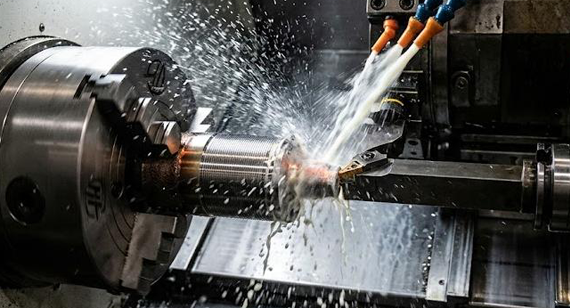
As a nickel-molybdenum-chromium superalloy engineered for high-pressure and corrosive environments, Hastelloy maintains structural stability at temperatures above 540°C, making it widely specified in aerospace and demanding chemical processing sectors. However, producing complex hastelloy components introduces distinct manufacturing risks. Without controlled feed rates, targeted coolant delivery, and rigid fixturing, processing frequently leads to rapid tool degradation, thread galling, and geometric distortion in thin-walled features. Through 5-axis toolpath optimization and phased finishing sequences, complex Hastelloy structural components can achieve a 99.2% first-pass yield rate and tight tolerances of ±0.008 mm (demonstrated in the case study section below).
When developing corrosion- and heat-resistant Hastelloy assemblies, two primary challenges frequently arise: first, material selection errors among the more than 8 Hastelloy grades, which can lead to pitting or intergranular corrosion in active chemical media; and second, supplier inexperience with 5-axis strategies and carbide tooling, resulting in work-hardening tool breakage, stripped threads, thin-wall warping, costly material scrap, and project delays. Addressing these core manufacturing risks is the main focus of this guide, alongside practical evaluations of material comparisons, surface treatments, and welding considerations.
Variations in chemical composition among the eight mainstream Hastelloy grades directly determine their corrosion resistance mechanisms and structural stability in strong acids, oxidizing media, and elevated temperatures. Precise grade matching against specific chemical media and operating parameters is critical prior to CNC machining and component design.
1. Hastelloy C-276 (UNS N10276) CNC Machining
2. Hastelloy C-22 (UNS N6022) CNC Machining
3. Hastelloy X (UNS N06002) CNC Machining
4. Hastelloy B-2 (UNS N10665) CNC Machining
5. Hastelloy B-3 (UNS N10675) CNC Machining
6. Hastelloy G-30 (UNS N06030) CNC Machining
7. Hastelloy G-35 (UNS N06035) CNC Machining
8. Hastelloy N (UNS N10003) CNC Machining
Table : Core Physical and Mechanical Properties of the 8 Main Hastelloy Grades
| Property / Grade | Hastelloy C-276 | Hastelloy C-22 | Hastelloy X | Hastelloy B-2 | Hastelloy B-3 | Hastelloy G-30 | Hastelloy G-35 |
| UNS Designation | N10276 | N6022 | N06002 | N10665 | N10675 | N06030 | N06035 |
| Primary Alloy Elements | Ni-Cr-Mo-W | Ni-Cr-Mo-W | Ni-Cr-Fe-Mo | Ni-Mo | Ni-Mo-Fe | Ni-Cr-Fe-Mo-Cu | Ni-Cr-Mo |
| Density (g/cm³) | 8.89 | 8.69 | 8.22 | 9.22 | 9.22 | 8.31 | 8.22 |
| Melting Range (°C) | 1325–1370 | 1357–1430 | 1260–1355 | 1330–1380 | 1370–1418 | 1330–1380 | 1315–1370 |
| Tensile Strength (MPa, Min) | 690 | 690 | 655 | 760 | 790 | 655 | 690 |
| Yield Strength (MPa, Min) | 283 | 310 | 240 | 350 | 350 | 275 | 290 |
| Elongation (%, Min) | 40 | 45 | 35 | 40 | 40 | 40 | 45 |
| Thermal Conductivity at 20°C (W/m·K) | 10.2 | 11.1 | 9.1 | 11.5 | 10.8 | 11.8 | 11.2 |
| Rockwell Hardness (HRB, Typical) | 90 | 93 | 88 | 94 | 95 | 88 | 90 |
Table: Industrial Applications of Hastelloy CNC Parts
Hastelloy components are specified where standard stainless steels and conventional superalloys fail under combined thermal, mechanical, and chemical stresses. Below is a structured overview of the primary industrial sectors relying on precision-machined Hastelloy parts:
| Industry Sector | Operating Conditions and Environment | Core Machined CNC Components | Primary Hastelloy Grades |
| Aerospace and Gas Turbines | Continuous exposure to temperatures exceeding 1000°C, high-velocity thermal cycling, and aggressive combustion byproducts. | Combustion chamber liners, afterburner fuel spray bars, turbine transition ducts, and high-temperature stator vane brackets. | Hastelloy X |
| Chemical Processing and Petrochemicals | Severe immersion in active reducing acids such as hydrochloric and hydrofluoric, oxidizing acid mixtures, and high-pressure organic synthesis. | Multi-port control valve bodies, custom pipe flanges, heat exchanger tube sheets, reactor agitator shafts, and distillation column internals. | Hastelloy C-276, C-22, B-3 |
| Oil and Gas (Downhole and Subsea) | Very hostile downhole environments characterized by high pressure, elevated temperatures, high levels of hydrogen sulfide, and high-chloride brine. | Subsea tree valve cores, downhole safety valve bodies, logging-while-drilling sensor housings, and sour-gas pressure boundary fittings. | Hastelloy C-276, C-22 |
| Pharmaceutical and Fine Chemicals | High-purity chemical reactions requiring absolute zero metal-ion contamination and complete resistance to clean-in-place acid wash solutions. | High-precision sanitary valve stems, reactor cover flanges, dosing pump impellers, and custom hygienic pipe connectors. | Hastelloy C-22, C-276 |
| Environmental and FGD Systems | Exposure to highly corrosive sulfur dioxide gas, wet chlorine, sulfuric acid mist, and highly abrasive lime slurries. | FGD absorber spray nozzles, slurry pump wear rings, damper valve shafts, and mist eliminator mounting hardware. | Hastelloy C-276, G-30, G-35 |
Why Compare These Three?
They are all corrosion-resistant metals for CNC parts; excellent mechanical stability under load; suitable for precision tight-tolerance machining.
| Grade | Hastelloy C-276 (Use the Most Common Grade as the Example) | 316L Stainless Steel | Titanium Grade 5 |
| When You are Recommended to Use One of Them? | Critical chemical processing valve bodies, reaction vessel nozzles, pump impellers, heat exchanger tube sheets, high-pressure piping flanges, and high-chloride manifold blocks. | General-purpose industrial fluid fittings, ambient-temperature liquid manifolds, low-pressure valve housings, instrument protection sleeves, and cost-sensitive structural hardware. | Aerospace structural brackets, high-speed rotating shafts, subsea exploration housings, marine hardware, and lightweight corrosion-resistant fasteners. |
| Distinct Characteristics | High density (8.89 g/cm³); nickel-chromium-molybdenum system with 4% tungsten; severe work-hardening rate; PREN > 60. | Lower density (8.00 g/cm³); iron-based austenitic structure with 16% to 18% Cr and 10% to 14% Ni; PREN 23 to 25; yield strength of 170 MPa. | Low density (4.43 g/cm³); alpha-beta titanium alloy (Ti-6Al-4V); high yield strength (880 MPa); relies on TiO₂ surface passive film. |
| Key Advantages | Exceptional resistance to severe reducing and oxidizing acids, wet chlorine gas, and localized pitting or crevice attack up to 1040°C. | High cost-effectiveness; excellent machinability and weldability; wide stock availability in standard rod, plate, and bar shapes. | Superior strength-to-weight ratio; outstanding resistance to nitric acid, seawater, and wet chlorine gas at nearly half the density of nickel alloys. |
| Limitations to Consider | High raw material procurement cost (6 to 8 times 316L); accelerated tool edge wear; requires lower cutting speeds (20 to 40 m/min). | Prone to pitting in chloride solutions exceeding 1,000 ppm; passive film dissolves in >5% non-oxidizing mineral acids; susceptible to thread galling. | Rapid chemical dissolution in non-aerated reducing acids (hydrochloric and hydrofluoric acids); low elastic modulus causes elastic springback during machining. |
Hastelloy vs. 316L Stainless Steel
Hastelloy vs. Titanium Grade 5
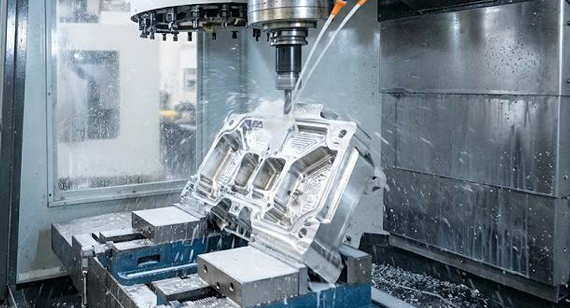
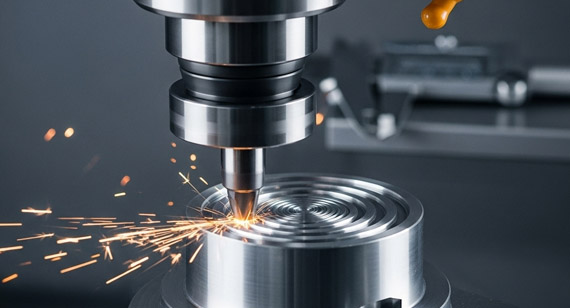
Machining Hastelloy alloys presents metallurgical and mechanical factors that affect production costs, part accuracy, and overall cycle times compared to standard stainless steels or conventional carbon steels. Precision machining facilities must address four primary technical challenges during production.
First, work hardening occurs as plastic deformation develops within the shear zone during cutting. Any tool dwell or hesitation causes the machined surface layer hardness to increase, generating residual stresses that can lead to part distortion during stress relaxation. This hardened layer accelerates tool wear and micro-chipping, requiring regular insert changes that increase consumable expenses and extend machining lead times.
Second, low thermal conductivity restricts the dissipation of cutting heat through the chips or the workpiece, concentrating elevated temperatures at the tool-chip interface. This thermal concentration causes dimensional variations from thermal expansion, resulting in out-of-tolerance parts and increased scrap rates. In addition, high alloy ductility produces continuous, stringy chips that do not break easily under standard chip-breaker geometries. These long ribbons tend to wrap around tooling and workpiece surfaces, risking surface scratches on precision-machined areas and requiring effective chip control to protect surface finish and prevent tool interference.
Finally, high tensile strength and shear resistance generate substantial cutting forces at the tool tip. These radial and axial forces can induce machine spindle deflection and tool vibration, particularly when producing thin-walled components, deep pockets, or complex internal features. To maintain stability and prevent chatter marks that affect surface finish, cutting parameters must be selected conservatively, leading to increased cycle times and lower overall processing efficiency.
To overcome the metallurgical and mechanical challenges associated with Hastelloy alloys, precision machine shops implement four key technical strategies focused on tooling, parameters, thermal management, and fixturing.
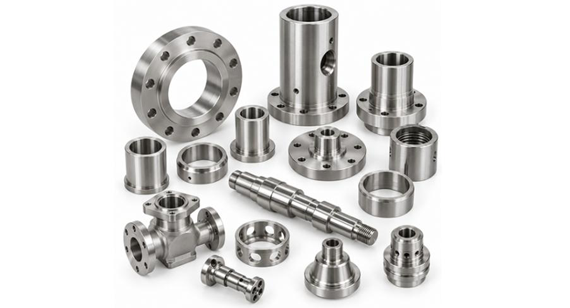
Design for Manufacturability (DFM) for Hastelloy parts requires addressing structural stress, geometry limitations, and tool life economics early in the design stage. Incorporating specific dimensional guidelines and process controls prevents part distortion, tool failure, and budget overruns.
1. Thin-Wall Distortion and Residual Stress Control
Machining ring-shaped or shell-like Hastelloy components often triggers dimensional instability. Removing large volumes of raw stock releases internal residual stresses, causing springback or warping.
Wall Thickness Thresholds: Avoid designing uniform wall thicknesses below 1.5 mm where possible. For thin-walled features under 2.0 mm, specify a stepped wall thickness or reinforcing ribs to maintain rigidity during machining.
Machining Margin Strategy: Implement multi-stage stress relief. Reserve a semi-finishing allowance of 0.5 mm to 1.0 mm per side, followed by a secondary stress-relief heat treatment (such as solution annealing at 1060°C to 1140°C with rapid quenching) prior to final finish passes of 0.1 mm to 0.2 mm.
2. Deep Micro-Holes and Threading Risks
Small-diameter tapped holes present a high risk of tool breakage in Hastelloy due to the material's high shear strength and toughness. Spiral point or spiral flute taps frequently bind, leading to broken tools embedded in near-finished parts.
Aspect Ratio Limits: Limit tapped hole depth-to-diameter ratios to 2:1 or less for sizes M2 to M5. For hole depths exceeding 2.5 times the nominal diameter, modify the design to use clearance holes with through-bolts or insert thread-locking sleeves.
Thread Milling Preference: Re-evaluate threaded features on DFM reviews to replace cut or form tapping with thread milling. Thread milling reduces cutting forces, allows chip evacuation, and eliminates the risk of scrapping a part if a tool breaks. For blind holes, allow an unthreaded bottom clearance of at least 1.5 times the thread pitch.
3. Tool Wear Economics and Cost Estimation
The high strain-hardening rate and thermal resistance of Hastelloy cause rapid tool edge breakdown compared to standard stainless steels. Failing to account for insert consumption during initial project quoting can result in cost underestimation and inconsistent batch quality.
Tool Life Expectations: Factor in reduced tool life metrics during programming. Carbide insert edge life when machining Hastelloy C-276 typically averages 15 to 30 minutes of continuous cut time at cutting speeds of 25 to 35 m/min.
Dimensional Stability Across Batches: Schedule tool changes based on cut-time tracking rather than waiting for visual insert failure. Replacing tools proactively prevents dimensional drift caused by tool edge wear and avoids surface finish degradation on critical sealing surfaces.
Ensuring part reliability extends beyond machining metrics. Post-processing selection, weldability considerations, and supplier quality certification significantly influence long-term field performance, project lead times, and overall manufacturing budgets.
Surface Finishing Options and Process Trade-Offs
Surface finishing processes are chosen based on the service environment, budget constraints, and required corrosion resistance. The primary surface treatment options for Hastelloy CNC components include:
Weldability and Joint Integrity Evaluation
Hastelloy exhibits good weldability using gas tungsten arc welding (GTAW), though thermal management remains critical to maintain heat-affected zone (HAZ) corrosion resistance.
Supplier Quality Assurance and NDT Qualification
Auditing and qualifying CNC machining facilities for Hastelloy components requires verifying that the supplier maintains rigorous quality control protocols throughout production:
CNC Machining Hastelloy C-276 Valve Bodies With ±0.008 mm Tolerances and Achieving 99.2% First-Pass Yield.
An overseas chemical processing equipment client required custom-machined Hastelloy C-276 valve bodies designed for high-pressure corrosive environments. Component specifications demanded tight dimensional control with a critical tolerance threshold of plus or minus 0.008 millimeters across all sealing interfaces, port alignments, and internal thread features to ensure leak-free operation under extreme operating pressures.
The client's previous manufacturing vendor failed to establish stable processing conditions, resulting in severe work hardening during internal threading operations. Tool dwell and insufficient heat removal caused the material surface to harden instantly from an initial hardness of 250 HB to over 400 HB. This sudden hardening led to tap binding, severe thread tearing, and surface roughness levels that exceeded allowable design specifications, ultimately driving scrap rates above 25 percent and causing project delivery delays.
Solutions: Deploying Five-Axis Machining, Thread Milling, and High-Pressure Cooling to Overcome Thermal Accumulation
To resolve these processing hurdles, our manufacturing engineers abandoned conventional tapping methods and deployed five-axis CNC machining centers combined with specialized thread milling strategies. Custom micro-grain carbide inserts featuring polished top faces, sharp positive rake angles of 12 degrees, and specialized chip-breaker geometries were selected to actively shear the material rather than ploughing, successfully reducing cutting forces by 35 percent. Furthermore, a dedicated internal cooling system delivering fluid directly through the spindle at 70 bar pressure was integrated to rapidly flush stringy, continuous chips out of deep thread pockets, completely preventing chip re-cutting and maintaining strict thermal equilibrium throughout the cutting cycle.
Results: Reaching Plus or Minus 0.008 Millimeter Tolerance, Ra 0.4 Micrometer Finish, and 99.2 Percent Yield
By combining optimized toolpath strategies, conservative cutting speeds, and high-pressure chip evacuation, critical bore dimensions and thread profiles were consistently held within the required tolerance of plus or minus 0.008 millimeters across the entire production run. The internal sealing faces achieved a stable surface finish of Ra 0.4 micrometers directly off the machine without requiring secondary manual polishing operations. These process improvements drove first-pass production yield from under 75 percent up to 99.2 percent while reducing total cycle time per part by 18 percent.
Successful production of Hastelloy CNC components relies on balancing metallurgical expertise with precise mechanical execution. From selecting the appropriate alloy grade for hostile chemical service to applying tailored 5-axis tooling and stress-relief strategies, every engineering decision directly impacts part performance, tool longevity, and overall production costs. As demonstrated throughout this guide, overcoming severe work hardening and maintaining tight tolerances requires a controlled, systematic approach to both part design and shop-floor manufacturing.
Are you developing complex Hastelloy parts, evaluating material alternatives, or aiming to reduce scrap rates on challenging precision features? We are here to support your project. Send us your technical specifications, 2D engineering drawings (PDF), or 3D CAD files (STEP, STP, IGS), and our technical team will deliver a comprehensive manufacturability review and competitive production proposal to bring your design into production.
Send your 2D drawings, 3D CAD models, Hastelloy grade, operating media, temperature, pressure, tolerance requirements, surface finish, welding or NDT requirements, prototype quantity and production quantity. VMT will review material selection, DFM, CNC machining strategy, tooling, coolant, post-processing, inspection and quotation requirements.
All information and uploaded files are secure and confidential.
1 Tell us what you need
2 Get solution & quote
3 Approve production
Email: inquiry@vimetal.com.cn
Q1: Why can't conventional high-speed steel (HSS) tools be used for machining Hastelloy?
Hastelloy has an extremely high work-hardening rate and low thermal conductivity, which causes heat to rapidly build up at the cutting zone. High-speed steel tools quickly soften, lose their cutting edge, and suffer catastrophic wear under these high thermal and mechanical stresses.
Q2: How can thin-wall Hastelloy part distortion be prevented during the design stage?
Maintain a minimum wall thickness of 1.5 mm, design uniform wall transitions, and incorporate reinforcing ribs to improve structural rigidity. Additionally, specify a multi-stage machining process with dedicated semi-finishing passes and stress-relief heat treatments to release internal residual stresses safely.
Q3: Why are Hastelloy C-276 and C-22 the most widely used grades in chemical valves?
Both grades offer exceptional resistance to severe oxidizing and reducing environments, including wet chlorine, ferric chloride, and strong mineral acids. Their high nickel, chromium, and molybdenum content prevents pitting, crevice corrosion, and stress corrosion cracking in aggressive chemical valve applications.
Q4: How can I quickly select among 8 Hastelloy grades based on working temperature and acid concentration?
Map your operating conditions by chemical exposure: select molybdenum-rich grades like Hastelloy B-3 for reducing acids like hydrochloric acid, and chromium-rich grades like Hastelloy C-22 or C-276 for mixed or oxidizing environments containing chlorides.
Q5: Can Hastelloy CNC machined parts still be welded after machining?
Yes, Hastelloy parts exhibit good weldability using Gas Tungsten Arc Welding (GTAW) with matching filler metals such as ERNiCrMo-4. Low heat input must be strictly maintained, and post-weld solution annealing may be required for critical service to restore optimal corrosion resistance in the heat-affected zone.
Q6: Why is the overall CNC machining cost of Hastelloy significantly higher than standard stainless steel?
Hastelloy requires substantially slower cutting speeds, advanced carbide tooling, high-pressure coolant systems, and frequent insert replacements due to rapid tool wear. The combination of high raw material cost, extended machining cycle times, and heavy consumable wear drives up total production expenses.
The technical information and manufacturing advice shared on the VMT website are for general guidance only. While we strive for accuracy, VMT does not guarantee that the processes, tolerances, or material properties mentioned are applicable to every specific project. Any reliance you place on such information is strictly at your own risk. It is the buyer's responsibility to provide definitive engineering specifications for any production orders. Final specifications and service terms shall be subject to the formal contract or quotation confirmed by both parties.


 +86 15099911516




 Read more